


Logo Aspebe

Who we are 

What we know

Aspebe partners

Industrial sites safety

Francaise Anglais Espagnol

ON AND OFF SITE SAFETY

EMERGENCY AND RISK TREATMENT BY DIFFERENT MEANS SUCH AS PREVENTION , FORECAST, TRAINING AND OPERATIONS, IN THE FIELDS OF INDUSTRIAL SITES EXPLOITATION.

  • Fire fighting (equipment and maintenance of the systems)
  • Scaffolding
  • Excavations
  • Gaz (tests and detection)
  • Crane Operations
  • Alarm system and emergency exercices
  • Electrical safety
  • Handling
  • Personal protection equipment.
  • First aid
  • Fire fighting
  • Self contained breathing apparatus
  • Extrication after road accident
  • Rescue in High Place and excavation
  • Defensive driving (ice and all terrains)
  • Instructor's training

  • Analyse and risk cover
  • Study of Rescue Plans
  • Making of handling rules.
  • First Aid
  • Fire Fighting
  • Intervention in hazardous zones.


RISK MANAGEMENT

Assessment of the existing material :

  • Sectors of Heavy Industry (production, transport, goods transformation, waste management


Risk Analyse : identification and localisation of potential risks
  • Analyse by risk basins
  • Quantitative study ( number, volume )
  • Risk problematics
  • Emergency plans proposal.


Risk Cover : existing means.

  • National level
  • Regional and local level
  • Proposal of an equipment plan to face risks.

Risk awareness: industrial and local.     
  • Teaching of the risk culture and environment protection
  • Awareness of the individual and structures (companies)


Instructor's Training :

  • Rescuers teams at work,
  • Local safety teams in public premises
  • Organisation of weekly exercices ( handling, tests
  • Health and safety of workers.


Implementation of politics regarding rules :

  • Industrial premises
  • Public Premises.


OPERATIONAL INTERVENTION UNIT.

  • Aim : create a dispositive of operationnal rescue
  • Material means: one or more fire fighting and first aid vehicles
  • Human means : local or expatriate staff trained to intervention techniques.

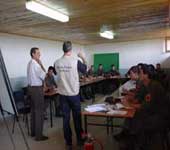
TRAINING.

  • Who ? local and expatriate staff é
  • Aim : improve the individual capacity of reactions of the staff in case of emergency situations.


Training offered :

  • Fire
  • Self contained breathing apparatus
  • First aid
  • Driving all terrains
  • Extrication
  • Risk
  • Instructor's training.
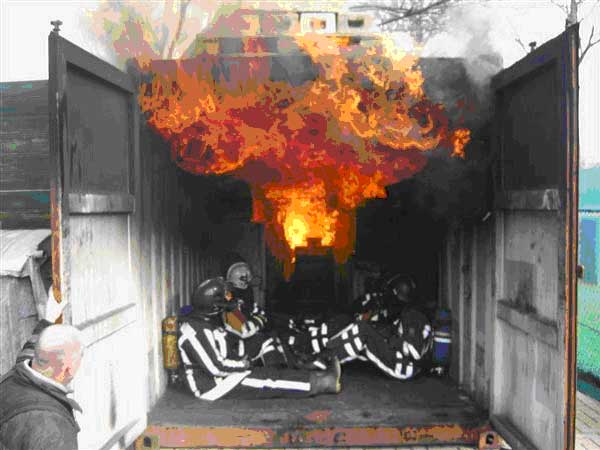
  • Fire fighting

Give to the staff the necessary knowledge in fire fighting in order to give them the opportunity to act safely during the use of extinguishers.

  • Self contained breathing apparatus

Give to the staff the necessary qualities to allow them to intervene in a close and toxic place with protected breathing ways.

  • First aid

Give to the staff the basic techniques of the rescuer without material in order to preserve the vital functions of a casualty waiting for the organised rescuers.

  • All terrain driving

Teach to the staff how to drive a lorry in a all terrain place in order to avoid accidents.

  • Extrication

Allow the selected staff to use lifting and extricating material during accidents implying one or more casualties.

  • Risk (executive, staff)

Preventive measures :

  • How to consider risks ?
  • How to identify it ?
  • Making of measures within the company (safety rules, emergency plans)

    Way to behave in case of accident :
  • Management of an intervention (alert, implementation of emergency plans)
  • Implementation of first aid gestures (first aid, fire, risks, technology)
  • Return to normal life.
  • Instructor's training

Implementation of a self training of the staff concerning the safety techniques giving to the necessary training to some members of the staff able to train other people.